Mexican Residency for Canadians Who Buy Property: Tourist, Temporary or Permanent?
By HomLista · · 4 min read
Does owning a home in Mexico give you residency? Not on its own. Compare the tourist permit, temporary and permanent residency for Canadians in 2026, with the income and savings thresholds in Canadian dollars and the tax question many owners overlook.
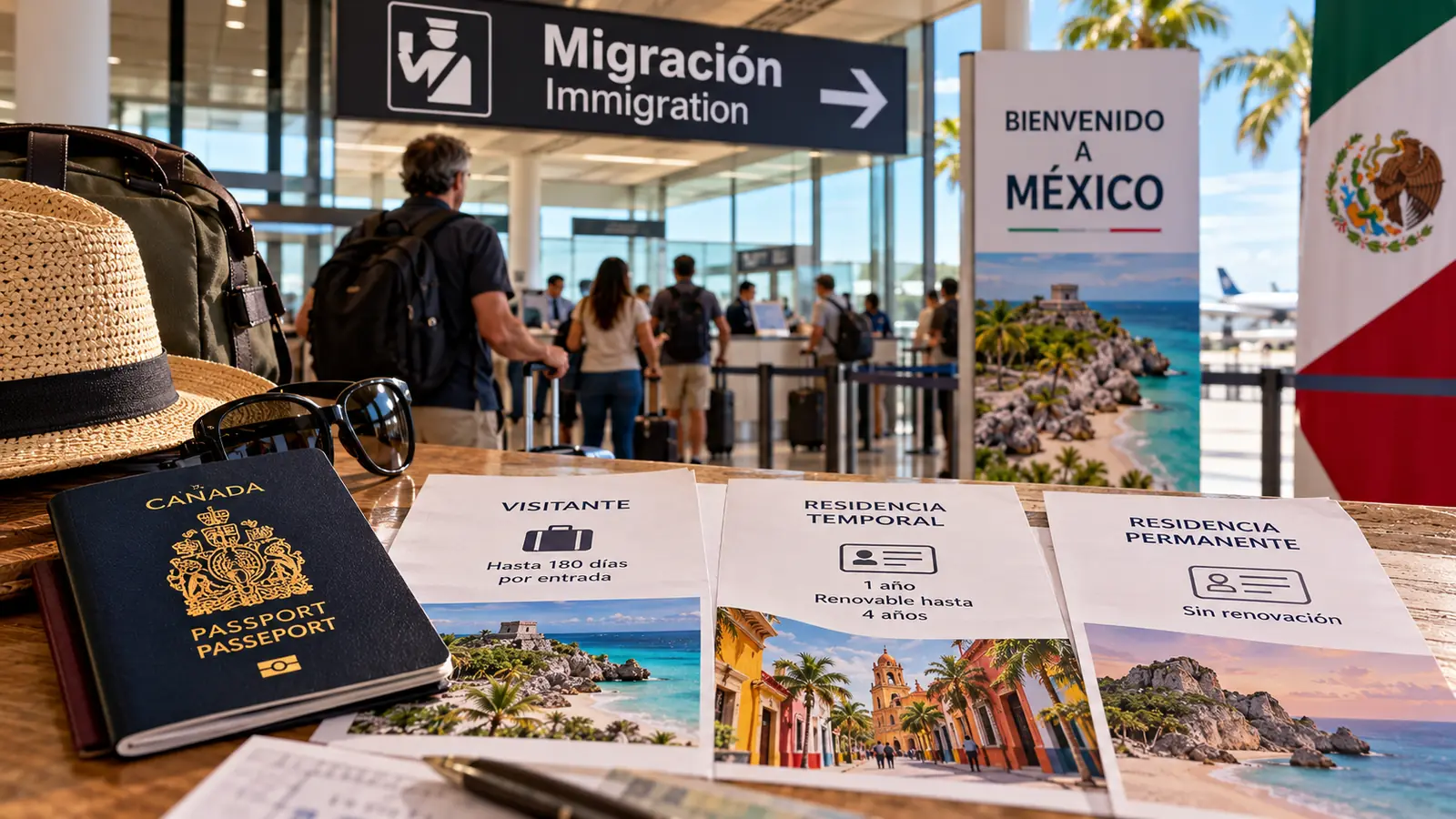
Many Canadians assume that buying a condo in Mexico comes with the right to stay as long as they like. It does not. Owning property and having Mexican residency are two separate things, and choosing the right status depends on how long you want to stay each year. Here are your three options, side by side.
Option 1: stay as a visitor
Most snowbirds never apply for residency. As a Canadian visitor, you can be granted up to 180 days per entry, but the immigration officer decides the actual number of days at the border, and shorter stays are being granted. Ask for the days you need and check your entry record before you leave the airport.
Suits you if: you spend the winter in Mexico and the rest of the year in Canada.
Limits: no guarantee on the number of days, and you cannot work.
Option 2: temporary residency
Temporary residency lets you stay year-round. It is granted for one year at first and can be renewed for up to four years in total, after which you can apply for permanent residency. You apply at a Mexican consulate in Canada, then complete the process with Mexico’s immigration institute (INM) after you arrive.
To qualify financially in 2026, you must meet one of these criteria, according to Mexperience (consulates can apply their own variations):
Monthly income: about 79,800 pesos, roughly CAD 6,260 a month, over the past six months.
Savings or investments: about 1.34 million pesos, roughly CAD 105,000, held for the past twelve months.
Property in Mexico: owned property worth about 10.76 million pesos, roughly CAD 844,000, free of liens.
Option 3: permanent residency
Permanent residency never needs renewing. You can reach it after four years as a temporary resident, or apply directly if you are retired and meet the higher thresholds:
Monthly income (pension or retirement income): about 133,700 pesos, roughly CAD 10,500 a month.
Savings or investments: about 5.38 million pesos, roughly CAD 422,000.
These amounts are tied to Mexico’s indexed reference unit (UMA), so they change every year. Peso figures converted at about 12.75 pesos per Canadian dollar.
Buying a home in Mexico does not give you residency on its own. Only an unusually expensive property, worth about CAD 844,000 or more, can serve as proof for temporary residency.
Which status fits you?
Under six months a year in Mexico? Stay as a visitor and keep your Canadian ties simple.
Six to twelve months, still working or not yet retired? Temporary residency, if you meet the income or savings test.
Retired and moving for good? Permanent residency, directly if your pension meets the threshold.
The tax question owners overlook
Immigration status and tax residency are different. Under Mexican tax rules, having a home available in Mexico is one of the factors that can make you a Mexican tax resident, and the Canada–Mexico tax treaty then decides which country has priority. If you plan to spend most of the year in Mexico, or give up your Canadian home, speak with a cross-border tax adviser before you change your status. Leaving Canada for tax purposes can also trigger Canadian departure tax and affect your provincial health coverage.
Practical points
Cars: a vehicle with Canadian plates is tied to your immigration status in Mexico; permanent residents generally cannot keep one, so check the rules before you drive down.
Bank accounts and utilities: residency makes opening a Mexican bank account much easier.
Paperwork: keep your residency card valid; renewals are done in Mexico, not at the consulate.
Buying first? Our checklist for Canadians buying property in Mexico covers the purchase, closing and CRA reporting step by step.
Updated October 2026. Thresholds are approximate and set annually; confirm with the Mexican consulate where you apply. This article is general information, not immigration or tax advice.