Buying Property in Cancun as a US Citizen: 11 Questions Answered (2026)
By HomLista · · 5 min read
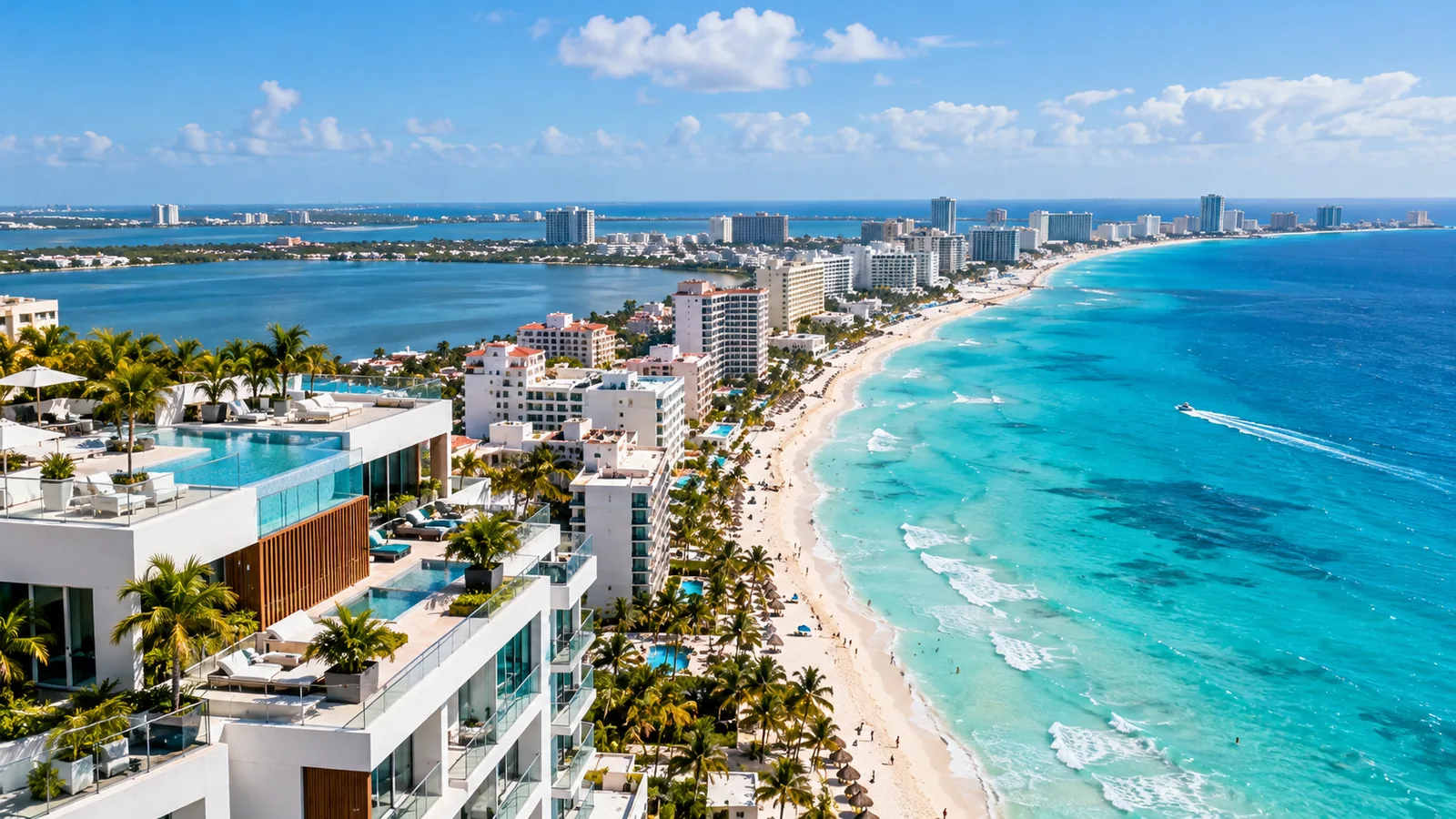
Can Americans own property in Cancun? We answer the 11 questions US buyers ask most: the fideicomiso, IRS reporting, financing, title insurance, closing costs, prices per square foot and how long you can stay.
Cancun is a two-to-four-hour flight from most major US cities, and for many Americans it is the first place they consider when they think about owning a home in Mexico. Buying there is legal and common, but the process works differently from a US closing. Below are straight answers to the questions US buyers ask us most, updated for 2026.
Ownership and the fideicomiso
1. Can a US citizen legally own property in Cancun?
Yes. Cancun sits inside Mexico’s “restricted zone”, the strip within 50 km of the coast and 100 km of the borders defined by the Foreign Investment Law. Foreigners cannot hold residential title there directly, so they buy through a fideicomiso, a bank trust that holds title on their behalf.
2. Is a fideicomiso just a long-term lease?
No. You are the beneficiary with full rights of use: you can live in the home, rent it out, renovate it, sell it, and name heirs as substitute beneficiaries. The trust runs up to 50 years and can be renewed. The bank charges a setup fee and an annual fee, so compare banks before you commit.
3. Do I have to report the fideicomiso to the IRS as a foreign trust?
Generally not. Under Revenue Ruling 2013-14, the IRS concluded that a standard Mexican land trust is not a foreign trust for US tax purposes, so Forms 3520 and 3520-A are typically not required. The ruling assumes the bank only holds title to the property; confirm your trust agreement matches that structure with your tax advisor.
Taxes and reporting back home
4. Do I report the property on an FBAR or Form 8938?
Real estate held directly is reportable on neither form, according to the IRS comparison of Form 8938 and FBAR. But a Mexican bank account is different: if your foreign accounts together exceed $10,000 at any time during the year, you must file an FBAR, and Form 8938 may apply above its own thresholds.
5. How is rental income taxed?
Mexico taxes rental income from property located there, and platforms that host short-term rentals withhold Mexican taxes. As a US citizen, you also report that income on your US return. A foreign tax credit generally prevents you from paying full tax twice. Hire a Mexican accountant (contador) and a US preparer who knows cross-border filings.
Money and closing
6. Can I get a mortgage for a Cancun condo?
Most American buyers pay cash. Some use a home equity line on their US property, and many pre-construction developers offer payment plans. Cross-border mortgages exist, but they usually require larger down payments and come with higher rates than US home loans.
7. Who handles the closing?
A Mexican notario público, a lawyer appointed by the state, not the equivalent of a US notary. The notario verifies title, calculates and collects taxes, and records the deed. Your own real estate attorney is optional but worth it if you are buying remotely.
8. Should I buy title insurance?
It is not mandatory, but it is available. Stewart Title Guaranty de México, for example, insures owners against losses from forged powers of attorney, identity fraud, prior-owner liens and unrecorded easements. For a buyer living thousands of miles away, it is cheap peace of mind.
Prices and practicalities
9. How much does a condo cost in Cancun?
Listings on HomLista averaged about 28,750 pesos per square meter in October 2026. At the Banxico rate of roughly 18.25 pesos per dollar, that is about $1,575 per m², or roughly $146 per square foot. A 90 m² (970 sq ft) two-bedroom at that average would cost around $142,000, but prices vary widely: Puerto Cancun and the Hotel Zone sit far above the city average, while gated communities along Avenida Huayacán are more affordable.
10. How long can I stay in Mexico each year?
As a tourist, you can be granted up to 180 days per entry, but the immigration officer decides the actual number, and shorter stays are common. If you plan to spend most of the year in Cancun, look into temporary or permanent residency.
11. What mistakes do US buyers make most often?
Wiring deposits to a personal account instead of a company or escrow account.
Buying pre-construction without checking permits and the developer’s track record.
Assuming every condo allows short-term rentals; read the HOA rules first.
Skipping hurricane coverage; the season runs from June to November.
Owning in Cancun as an American is straightforward when three things are in place: a properly set-up fideicomiso, a notario you trust, and clean reporting to the IRS.
Start your search
Browse condos for sale in Cancun and houses for sale in Cancun, or contact real estate agencies in Cancun that regularly work with US buyers.
Canadian buyer? The rules on the Mexican side are the same, but your tax reporting is not: see our checklist for Canadians buying property in Mexico, including CRA Form T1135 and snowbird stay limits.
Updated October 2026. This article is for general information and is not legal or tax advice; consult a Mexican notario and a US tax professional about your situation.