Buying a Restored Colonial Home in Mérida: The 10-Point Inspection American Buyers Need
By HomLista · · 4 min read
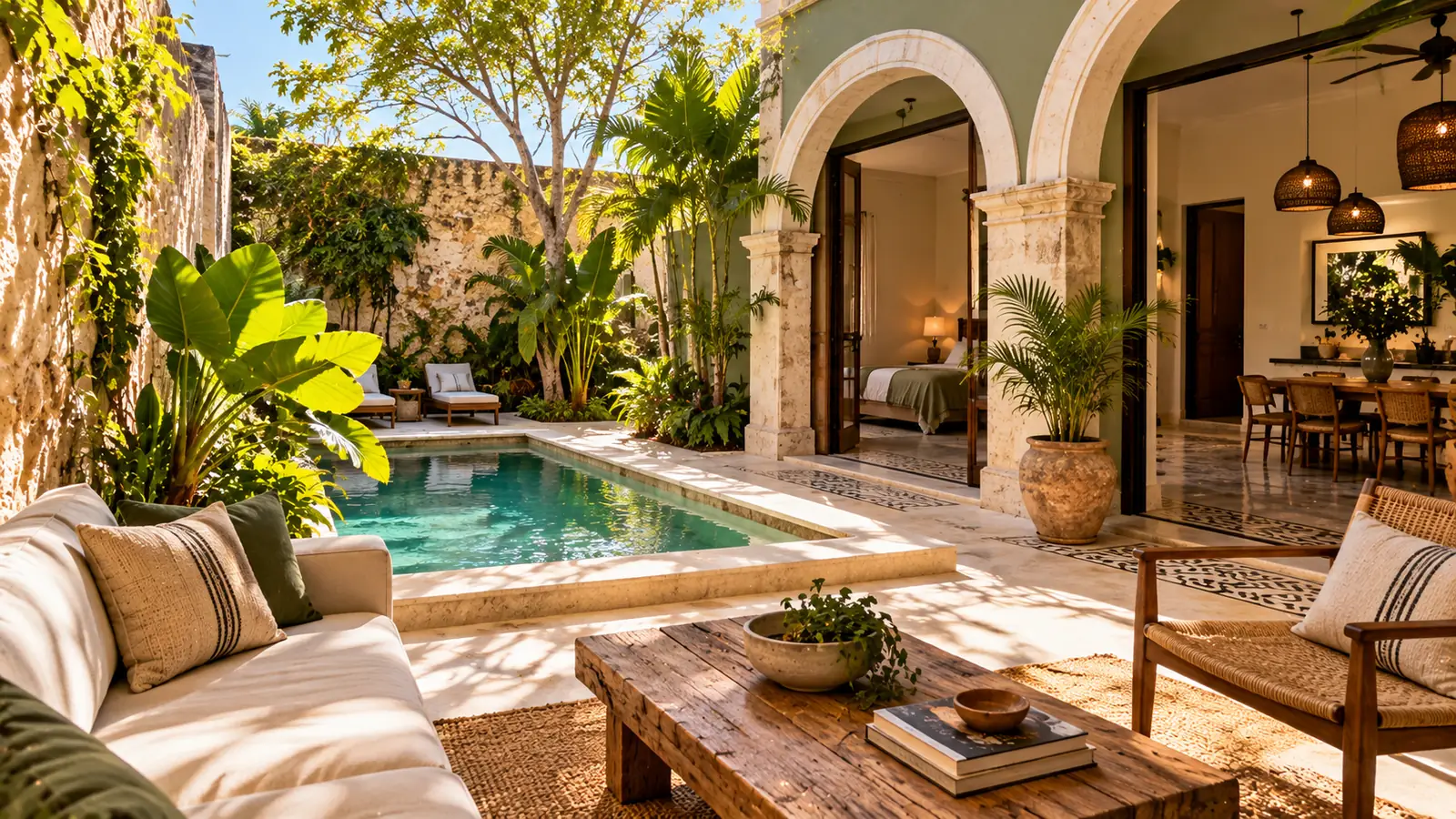
Many Americans buy colonial homes in Mérida that are already restored. A beautiful finish can hide unpermitted work, damp walls or a costly electricity tariff. Here is the 10-point inspection to run before you make an offer.
For many American buyers, the dream in Mérida is not a renovation project but a finished one: a restored colonial home with a plunge pool, polished cement floors and a shaded patio, ready to move in. Restored homes command a premium, though, and a beautiful finish can hide problems. Before you make an offer, run this 10-point inspection for restored colonial homes in Mérida.
Price context
HomLista listings in Mérida averaged about 22,600 pesos per m² in October 2026, roughly $1,230 per m² ($114 per sq ft) at 18.4 pesos per dollar. A fully restored house in a sought-after barrio such as Santiago or Santa Ana will sit well above that average, which is why the quality of the restoration matters so much.
The 10-point inspection
1. Permits for the restoration
Check: ask for the INAH authorization and the municipal building licence for the work already done. Unauthorized work in the historic center can be halted and must be undone at the owner’s expense; in 2025, 22 projects were suspended, according to Riviera Maya News.
Red flag: “The previous owner handled it” with no paperwork.
2. What the deed actually says
Check: compare the built area on the deed and in the property tax records with what you see: rooftop terraces, extra bedrooms and pools are often added without being declared.
Red flag: a three-bedroom house recorded as a one-bedroom.
3. The roof
Check: traditional roofs rest on wooden or steel beams; ask what was replaced, when, and how the roof was waterproofed.
Red flag: fresh paint on the ceiling and stains in the corners.
4. Damp walls
Check: thick stone walls wick moisture from the ground; look for peeling paint and salt deposits at the base of walls, especially after rain.
Red flag: new plaster only on the lower part of the walls.
5. Termites
Check: check wooden beams, doors and built-in furniture, and ask for the latest treatment record.
Red flag: small piles of powder under wooden elements.
6. The pool
Check: ask how the plunge pool was built and waterproofed and whether it leaks into neighbouring walls.
Red flag: a pool built right against a party wall with no documentation.
7. Electricity and air conditioning
Check: count the AC units and check the electrical panel. In Mexico, households that exceed a consumption threshold move to the much more expensive high-consumption residential tariff (DAC), so ask for the last spring and summer bills.
Red flag: bills that jump in April to June, or a panel that has not been upgraded.
8. Water and drainage
Check: many houses use a septic tank or biodigester; ask what is installed and when it was last emptied.
Red flag: no one knows where the septic tank is.
9. Solar and water heating
Check: solar panels can keep bills reasonable; ask for the installation date and warranty.
Red flag: panels installed without the utility’s interconnection paperwork.
10. Who did the work
Check: ask for the architect’s name and the main contractors, and talk to them if you can.
Red flag: no one can tell you who restored the house.
In a restored colonial home, you are paying for someone else’s renovation. Make sure it was done well, and done legally.
Who to bring along
An independent architect or engineer familiar with historic houses, not the one recommended by the seller.
A notario to review title, liens and taxes, and confirm you can hold the deed directly (usually the case in Mérida city).
A bilingual agent who knows the barrio and recent sales.
Still deciding between a colonial home and a new build? Compare both options carefully before you shop, and read our short-term vs long-term rental study if you plan to rent it out. Browse houses for sale in Mérida or contact agencies in Mérida (listings are in Spanish).
Updated October 2026. Prices converted at about 18.4 pesos per dollar. This article is general information, not legal or engineering advice.