Remote Workers Buying in Mexico City: Neighborhoods, 2026 Rules and the US Tax Questions to Settle First
By HomLista · · 6 min read
Neighborhoods, residency thresholds, Airbnb caps and IRS filings: what an American remote worker should check before buying a home in Mexico City.
Mexico City has become one of the first places American remote workers look when they want to stop renting and own something abroad: same time zones as the US, direct flights to most major cities, and neighborhoods where you can live without a car. Buying here is simpler than on the coast, but three things catch remote workers off guard: residency, short-term rental limits and US tax filings. This guide covers them in the order you will meet them.
Good news first: no fideicomiso in Mexico City
Mexico's "restricted zone" (100 km from a border, 50 km from a coast) forces foreigners to buy through a bank trust, the fideicomiso. Mexico City is outside that zone, so you can hold title directly in your own name. You will sign an agreement with the Ministry of Foreign Affairs (SRE) in which you agree to be treated as a Mexican national regarding that property, and the notary handles that permit as part of the closing (BBVA México).
That means no annual trust fee, which is one of the recurring costs buyers in Cancún or Los Cabos pay. If you are also comparing the coast, see buying property in Cancún as a US citizen.
Which neighborhood fits a remote worker?
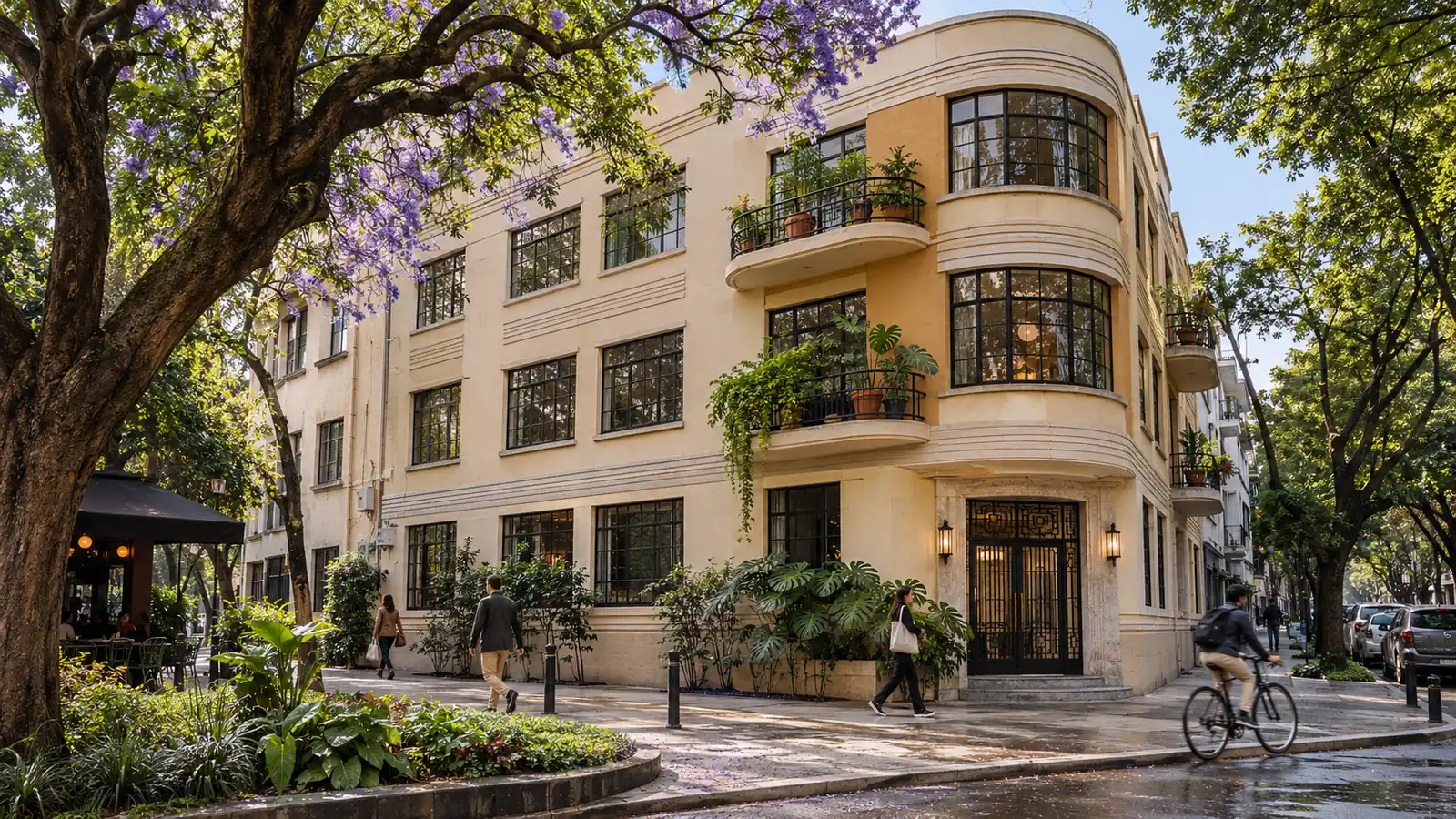
Roma Norte / Condesa
Why remote workers like it : Walkable, parks, cafés and coworking on every block, large expat community
What to watch : Highest prices per m² outside Polanco, noise, many older buildings
Juárez
Why remote workers like it : Central, next to Reforma, newer conversions and developments
What to watch : Some streets still feel commercial at night
Polanco
Why remote workers like it : Security, high-end buildings with amenities, close to corporate offices
What to watch : The most expensive area; HOA fees to match
Del Valle / Narvarte
Why remote workers like it : Residential, more space for the money, good for a dedicated home office
What to watch : Fewer short-term rental guests if you plan to rent part of the year
Coyoacán
Why remote workers like it : Quiet, houses with gardens, a slower pace
What to watch : Longer commutes to the airport and the central neighborhoods
Prices move fast in the central neighborhoods, so compare current listings rather than old averages: on HomLista you can filter Mexico City listings by neighborhood and contact the agent directly.
Check the building, not just the apartment
Mexico City sits on an old lakebed and is an active seismic zone; the September 2017 earthquake damaged buildings in Roma, Condesa and Del Valle in particular. Before you sign, ask for:
The building's year of construction and whether it was reinforced after 2017.
A structural safety opinion (dictamen de seguridad estructural) signed by a licensed engineer, especially for older buildings.
The HOA (administración) minutes and budget: they reveal pending repairs and special assessments.
Fiber internet availability in the building. For a remote worker this is not a detail: ask which providers already serve the unit.
Residency: you cannot work from a tourist stay forever
Mexico has no dedicated digital nomad visa. Remote workers who want to live here legally use temporary residency, which you apply for at a Mexican consulate in the US. In 2026 the economic solvency requirement is roughly:
Income: about US$4,300–4,500 net per month over the last six months, or
Savings: an average balance of about US$73,000–75,000 over the last twelve months.
The thresholds are indexed to Mexico's UMA and each consulate applies its own exchange rate, so check with yours before applying (Taxes for Expats). The visa must be exchanged for a resident card at an immigration (INM) office within 30 days of arrival; the card is renewable for up to four years. Owning property does not, by itself, give you residency.
Planning to Airbnb it while you travel? Read the 2024 rules
Many remote workers plan to rent the apartment when they are away. Mexico City now limits that:
Short-term rentals through platforms are capped at 180 days a year, approved by the city congress in October 2024 (Mexico News Daily).
Hosts must register each property in the city's Registry of Technological Platforms and file two occupancy reports a year; registry violations can be fined up to MXN 21,000.
The building's own rules can be stricter: check the HOA regulations before you count on rental income.
If rental income matters to your numbers, compare it with a long-term lease. Our short-term vs long-term rental comparison shows how to run that math.
The US tax questions to settle before you buy
This is the part most buyers leave for later, and it is the one that costs money if handled late. Talk to a cross-border tax adviser about these five points:
Can you become a Mexican tax resident? Mexico has no 183-day test: having your permanent home here, or your "center of vital interests", can make you a resident taxed on worldwide income. Buying your main home in Mexico City is exactly the kind of fact that matters.
FBAR and Form 8938. The property itself is not a financial account, but the Mexican bank account you open to pay HOA fees, utilities or receive rent is. If your foreign accounts exceed US$10,000 combined at any point in the year, you must file an FBAR (FinCEN).
Foreign earned income exclusion. Living abroad most of the year can let you exclude up to US$132,900 of earned income in 2026, if you pass the physical presence or bona fide residence test. It does not cover rental income.
Rental income is taxed twice on paper. You report it in Mexico and on your US return; the foreign tax credit usually prevents paying twice, but only if both sides are filed correctly.
Selling later. The US home sale exclusion applies to a main home anywhere in the world if you meet the ownership and use tests (IRS Publication 523). Mexico taxes the gain separately; ask the notary which exemptions you can claim, as they depend on your Mexican tax status.
How will you pay for it?
Mexican banks rarely lend to non-residents, so most Americans pay cash, use a US home equity line or negotiate developer financing. Wiring a six-figure sum also has its own traps. We cover the options and how to send the money safely in how Americans pay for property in Mexico.
Before you sign: a quick checklist
Neighborhood chosen for your daily routine, not just for weekends.
Structural opinion and HOA documents reviewed.
Residency route identified (income or savings) and consulate contacted.
Rental plans checked against the 180-day cap and building rules.
Tax adviser consulted on Mexican residency, FBAR and future sale.
Funds plan and wire process agreed with the notary.
Moving with children instead? Querétaro may suit you better: see our guide to moving to Querétaro with your family.
Browse apartments and houses for sale in Mexico City on HomLista and contact verified agents directly.