Ejido Land in Mexico: Why Americans Lose Money on It, and How to Verify a Title
By HomLista · · 4 min read
Cheap beachfront lots and “cesión de derechos” contracts often hide ejido land, communal farmland that foreigners cannot simply buy. What ejido land is, how it legally becomes private property, the warning signs and the documents that protect you.
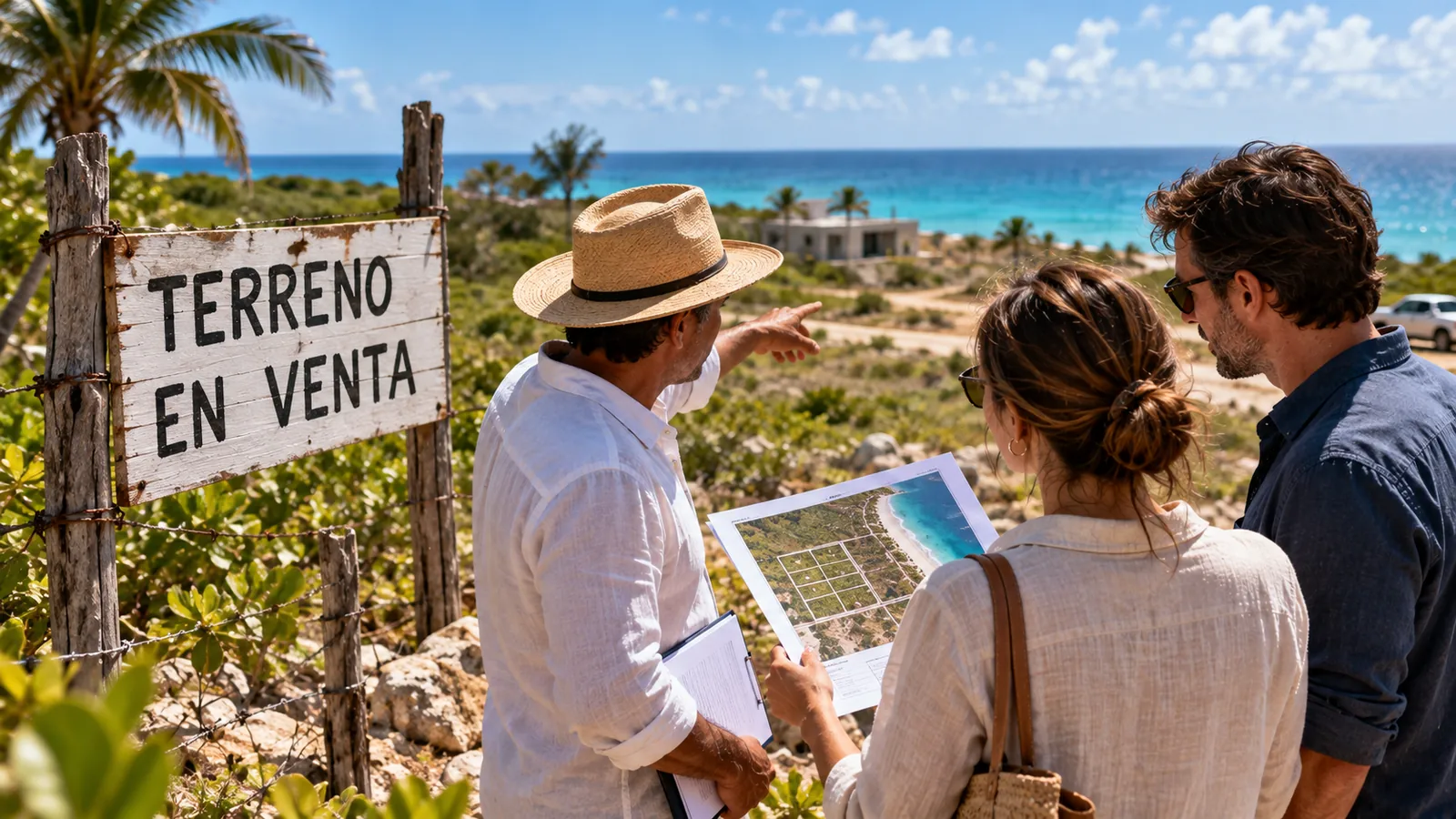
A lot near the beach at half the going rate, a friendly seller and a simple “transfer of rights” contract: this is how many Americans end up owning something they do not legally own. The problem has a name, ejido land, and it is one of the most expensive mistakes a foreign buyer can make in Mexico. Here is what it is and how to make sure the property you buy is not one of them.
What ejido land is
Ejidos are communal landholdings created by Mexico’s agrarian reform. Each ejido belongs to a community of members (ejidatarios), who hold rights to use parcels, often farmland or undeveloped land on the outskirts of growing towns, including resort areas. Ejido land is governed by the Agrarian Law, not by the ordinary property rules that apply to a condo in a registered building.
Can an American buy it?
Not as ejido land. An ejidatario’s rights over a parcel are not a deed you can buy. A parcel can only be sold to an outsider after it leaves the ejido regime through a process called dominio pleno (full ownership):
The ejido assembly authorizes its members to adopt full ownership of their parcels.
The ejidatario asks the National Agrarian Registry (RAN) to cancel the parcel’s agrarian registration.
The RAN issues a property title, which is recorded in the local Public Property Registry.
Only then does the land fall under ordinary civil law, as explained in this legal analysis of the Agrarian Law. If the parcel is within 50 km of the coast, a foreign buyer then needs a bank trust (fideicomiso) like any other coastal property; our Cancun buyer FAQ explains how it works.
The 30-day rule that can undo a sale
Even after dominio pleno, the first sale of a former ejido parcel must respect a right of first refusal (derecho del tanto, Article 84 of the Agrarian Law). In order, the seller’s relatives, people who have worked the parcel for more than a year, other ejidatarios, local residents (avecindados) and the ejido itself must be notified and given 30 calendar days to buy on the same terms. If that notice was skipped, the sale can be annulled. Where the land lies in an area reserved for urban growth, government bodies also have a 30-day preference right (Article 89).
With ejido land, the risk is not paying too much. It is paying for something the ejido can later take back, together with whatever you built on it.
That is not theoretical: a Fredrikson law firm alert describes buyers who developed property on ejido land, only for the ejido to dispute the sale and sue to recover the land and its improvements.
Red flags
A “cesión de derechos” instead of a deed. A transfer of ejido rights is not a title to private property.
A price far below comparable titled land. The discount usually reflects the legal risk.
Papers from the ejido office but nothing from the Public Property Registry. A certificate of possession or a letter from the comisariado is not a registered title.
No notario, or a notario who will not take the deal. Notaries refuse transactions they cannot register; that refusal is information.
A bank that cannot set up a fideicomiso for a coastal lot: banks only accept registered, titled property.
Pressure to pay in cash or to a personal account. A legitimate titled sale has nothing to hide.
Documents to demand before you pay anything
The RAN title (título de propiedad) showing the parcel left the ejido regime.
Proof that the title is recorded in the Public Property Registry, and a recent lien certificate (certificado de libertad de gravamen).
Evidence that the Article 84 notices were made and the 30 days have passed, if this is the first sale after dominio pleno.
A professional survey matching the boundaries on the title.
A written opinion from a Mexican real estate lawyer, independent from the seller and the agent.
The safest route
If you are not ready to run that verification, buy titled property in an established development or a registered condo building, where the history of the land has already been cleared. Compare condos for sale in Cancun or read our Los Cabos area guide before you look at land (listings are in Spanish).
Updated October 2026. This article is general information and not legal advice. Have every land purchase reviewed by a Mexican lawyer and a notario before signing.